Neusiok Trail Shelters: Copperhead Landing, Water and How They Shape the Walk
Three shelters sit along the 20.4 miles, roughly a third apart. That spacing is the single thing that makes the Neusiok a comfortable two-night walk rather than a long slog with an awkward middle.
01 — The setThree shelters, evenly spread
The shelters are simple structures — a roof, a floor, somewhere to get out of the rain — rather than cabins, and that is appropriate to the trail. What matters about them is the arithmetic: with stops at roughly a third and two thirds of the route, a walker covers something like seven miles a day, which on this ground is a relaxed pace even in wet conditions.
All three are first-come and first-served, and no permit is needed to use them or to camp anywhere else in the forest. In practice that means a Neusiok overnight can be decided on a Friday afternoon, which is much of the trail's appeal.
02 — Copperhead LandingCopperhead Landing
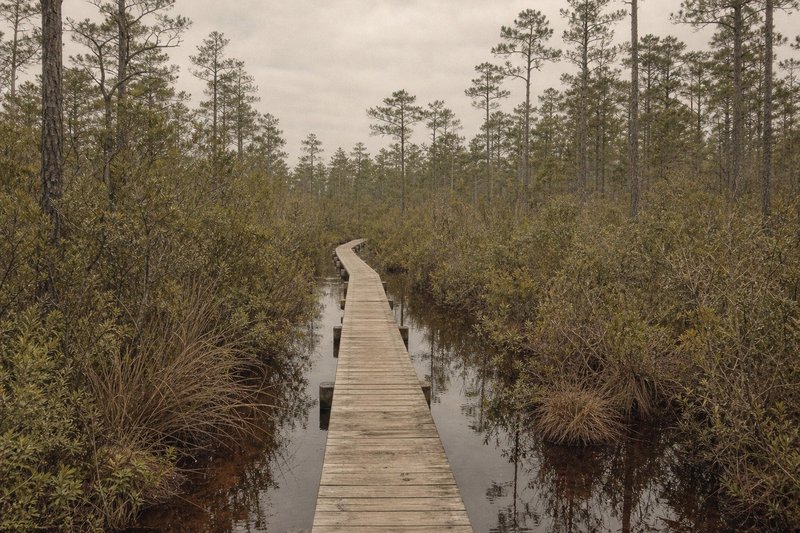
The best known of the three and the conventional first night for a southbound walk, at roughly mile 5.3 from Pine Cliff. It closes out the wettest section of the route — the northern pocosin — which makes arriving there feel like more of an achievement than five miles usually does.
Its name gets remarked on more than it deserves. Copperheads exist in this forest, as they do across the Carolina coastal plain; the sensible precautions are the ordinary ones, and the shelter is no more of a hazard than the trail either side of it.
Field noteArriving at a shelter in the dark in pocosin is worth avoiding. The tread braids around standing water and a head torch flattens exactly the depth cues you need.
03 — WaterThe water situation at each stop
This is the part of shelter planning that catches people out. The Croatan is full of water and very little of it is convenient: the pocosin holds tannin-stained water that is slow to push through a fine filter and will clog a cartridge, while the clearer upland creeks are the first to drop in a rainless autumn.
The workable approach is to treat capacity rather than resupply as the plan — carry through the long upland stretch — and to bring a pre-filter or settling bottle if you intend to draw from the bog. A breakdown of where water sits along the mile axis is on the trail overview.
04 — UseUse, etiquette and hanging nearby
Shelter etiquette on the Neusiok is the same as anywhere: leave floor space for late arrivals, take everything out with you, and do not treat the structure as storage. Traffic is light enough that a full shelter is unusual, but it happens on good autumn weekends.
A fair number of regulars hang rather than sleep inside, which suits this forest — see the hammock camping page. Either way the shelters remain the reference points the walk is built around, and the seasonal page covers which months make a night out here comfortable.
05 — QuestionsCommon questions about the shelters
How many shelters are there on the Neusiok Trail?
Three, spaced roughly a third of the route apart, which makes a two-night walk the natural rhythm rather than a forced march.
Do the shelters need to be booked?
No. All three are first-come, first-served, and no permit is required for backcountry camping anywhere in Croatan National Forest.
What is Copperhead Landing like?
It is the best known of the three and the usual first night for a southbound walk, being the first of the three southbound from the northern terminus. Like the others it is a simple trail shelter rather than a cabin.
Is there water at the shelters?
Not dependably. Some sit near a creek, but the upland creeks drop first in a dry autumn and the pocosin water needs a pre-filter. Plan capacity rather than assuming a refill.
Can I hang a hammock at a shelter?
Yes, and many people prefer to. There are anchors around all three, and hanging leaves the shelter floor for whoever arrives after dark.
What if a shelter is full?
Camp nearby. Dispersed camping is permitted throughout the forest, so a full shelter is an inconvenience rather than a problem — though finding dry ground in the pocosin sections takes more looking than it does in the uplands.