Backpacking Gear Notes from Two Very Different Carolina Forests
Two forests, two problems. The Croatan tests kit against water, humidity and insects; the Uwharrie tests it against repeated gradient. Most gear discussion that grew up around these trails came down to one or the other.
01 — The local testWhat these forests actually demand
Neither trail is long. Neither is remote. Nothing here calls for expedition kit, and a great deal of general backpacking advice is simply irrelevant to a two-night walk with a car at each end.
What does matter is specific and local: tannin-stained water that clogs filters, ground too wet to sit or pitch on, an insect load that makes exposed skin untenable for four months of the year, and — inland — enough short steep climbs that pack weight is felt. Kit chosen against those four things works here. Kit chosen against a magazine list may not.
02 — StovesStoves and cooking for short trips
Trip lengths here are two or three days, there is no altitude, and winter is mild — which removes most of the reasons to agonise over stove choice. Canister stoves dominate for good reason, and older designs remain perfectly serviceable.
Stability on soft ground is the one genuinely local consideration: a narrow-based stove on pocosin margin is easier to tip than the same stove on rock. Detail sits on the camping stoves page.
Field noteFire restrictions apply in dry spells across both forests. A stove is not always an alternative to a fire — sometimes both are prohibited.
03 — WaterWater treatment and the tannin problem
This is the gear question the Croatan poses that most places do not. Pocosin water is stained dark brown by tannins from decaying vegetation. It is not necessarily dangerous, but it is heavily laden with fine organic matter that clogs a fine filter element quickly.
The practical answers are a pre-filter, a settling bottle, or drawing from the clearer upland creeks where they are still flowing — which in a dry autumn they may not be. Gravity systems came up repeatedly in discussion here for exactly this reason; the water filters page covers that in detail.
04 — SeatingCamp seating, and why it comes up here
Camp chairs and stools are a comfort item that usually loses the weight argument. In this forest the argument is closer than usual, because dry ground to sit on is genuinely scarce — at a shelter or a hang site in the pocosin margin, the alternative to a stool is often standing.
Folding stools of the sort that pack to a tube were a recurring subject of local discussion, particularly among larger walkers for whom the ground-sitting alternative is less comfortable still. It is a personal trade rather than a recommendation.
05 — Small itemsKnives, insulation and the rest
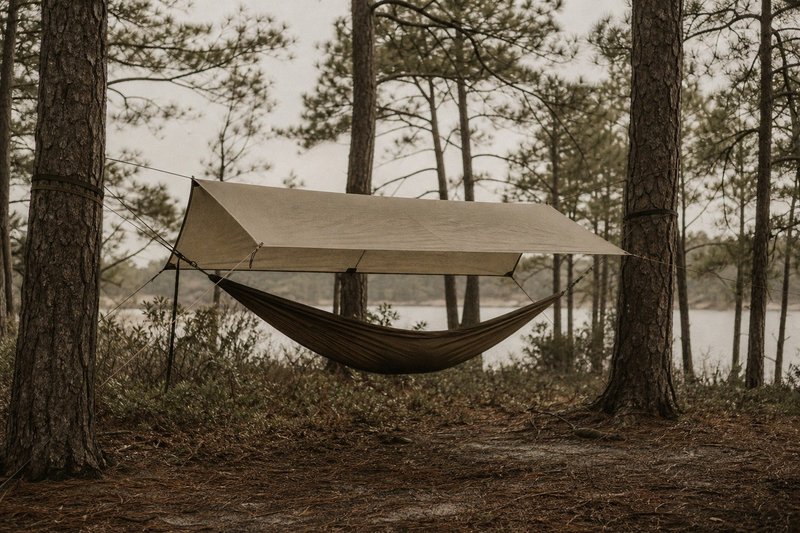
Beyond the big four, the recurring subjects were small: a folding knife that will not seize after three damp days, insulation that copes with humidity, and insect protection that actually seals. The down-versus-synthetic question has a real coastal answer — see the hammock camping page, since bottom insulation is where it matters most, and the gear guide for the detail.
Food and bear-bagging sit on the food page.
06 — QuestionsCommon questions about gear for these forests
What gear matters most for the Neusiok Trail specifically?
Footwear you are willing to soak, a water filter that copes with tannin-stained water, and insect protection in season. Nothing about the distance or the terrain is demanding; the ground conditions are.
Do I need a water filter or will tablets do?
Chemical treatment handles the biological problem but not the sediment or the colour, and pocosin water carries plenty of both. Most people here run a filter, often with a pre-filter ahead of it.
Is a camp chair worth the weight?
On a two-night trail with limited dry ground to sit on, a surprising number of regulars think so. It is a comfort item, and this forest gives comfort items an unusually good argument.
What stove suits a short trip here?
Anything simple. Trips are two or three days, resupply is a drive away rather than a mail drop, and there is no altitude or extreme cold to complicate fuel choice.
Does this site sell or recommend specific products?
No. These are notes on what the conditions demand, not product recommendations, and nothing here is monetised.
What is different about gear for the Uwharrie?
Gradient rather than water. Pack weight matters more inland because you are climbing repeatedly; drainage and insect protection matter less than on the coast.